

Last Updated on April 5, 2026 by Lori Powell
Halloween safety tips for dogs in Los Angeles are essential this time of year. Spooky season brings lights, costumes, candy, and commotion that can overwhelm even the most confident pup. Between trick-or-treaters ringing the doorbell, decorations lining every sidewalk, and tempting treats left within reach, Halloween can quickly become a stressful experience for dogs, especially those living in busy urban neighborhoods like West Hollywood, Silver Lake, or Santa Monica.
These expert safety tips from Pawsitive K9 Solutions will help your dog feel calm, secure, and well-prepared to enjoy the holiday. For a deeper look at getting your dog comfortable in a costume first, check out our full guide on dog Halloween costume training in Los Angeles.
Why Halloween Is One of the Hardest Nights for Dogs in LA
Halloween in Los Angeles is louder, busier, and more chaotic than in most cities. Popular neighborhoods like WeHo and Culver City see hundreds of costumed pedestrians in a single evening. For dogs, this means an onslaught of unfamiliar sights, sounds, and smells all at once.
Dogs that have not been desensitized to costumes, masks, or sudden noise may respond with fear, reactivity, or attempts to flee. According to the American Veterinary Society of Animal Behavior, early and positive social exposure significantly improves a dog’s long-term adaptability and behavior. That includes gradual, reward-based exposure to unusual outfits, props, and environments, ideally well before the holiday arrives.
This is also one of the most common nights for pets to go missing. According to the American Veterinary Medical Association, one in three pets will become lost at some point in their lifetime, and Halloween night is a peak risk window. Preparation is the most effective protection.
Halloween Safety Tip #1: Keep All Candy and Wrappers Out of Reach
One of the most urgent Halloween safety tips for dogs is preventing access to any candy or candy wrappers. Many popular Halloween treats contain ingredients that are seriously toxic to pets, including chocolate, raisins, and xylitol.
Why Xylitol Is Especially Dangerous for Dogs
Xylitol is a sugar alcohol used as a sweetener in sugar-free gum, candies, peanut butter, vitamins, and baked goods. When dogs consume xylitol, their bodies release three to seven times the normal amount of insulin, according to Cornell University College of Veterinary Medicine. This causes blood sugar to plummet within 30 to 60 minutes of ingestion, leading to weakness, disorientation, tremors, seizures, or collapse. In larger amounts, xylitol can also cause liver failure.
The ASPCA has issued an updated safety warning on xylitol, noting that even a single large piece of sugar-free gum can contain enough xylitol to cause a dangerous reaction in a small or medium-sized dog. Sugarless gum containers with 40 or more pieces pose a particularly high risk.
Chocolate and Other Halloween Candy Dangers
Chocolate remains one of the most common causes of accidental pet poisoning every Halloween. It contains theobromine and caffeine, both of which are toxic to dogs and can cause vomiting, elevated heart rate, seizures, and in severe cases, death. Dark chocolate and baking chocolate are significantly more dangerous than milk chocolate, but no amount is considered safe.
Raisins and grapes are equally dangerous and can cause sudden kidney failure in dogs. Candy wrappers pose an additional risk of choking or intestinal obstruction. Store all Halloween candy in sealed containers in high cabinets, and keep a pet-proof lid on your trash can.
What to Do If Your Dog Eats Candy
If your dog gets into candy, treat it as a medical emergency. Do not wait for symptoms to appear. Call your veterinarian immediately or reach one of these 24/7 poison control hotlines:
- Pet Poison Helpline: 855-764-7661
- ASPCA Animal Poison Control Center: 888-426-4435
Acting quickly can be the difference between a full recovery and a serious medical crisis.
Halloween Safety Tip #2: Choose Safe, Comfortable Costumes
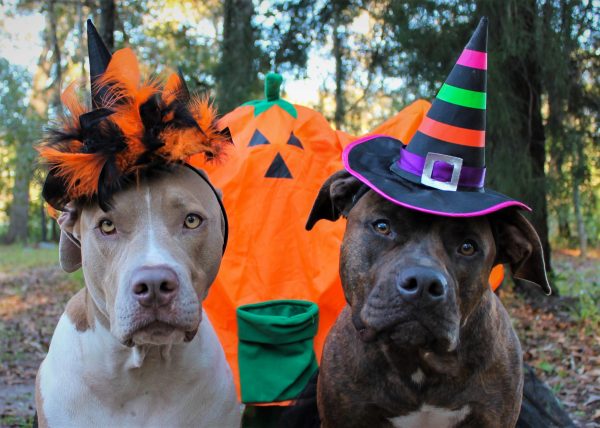
Dressing your dog up for Halloween can be a fun and memorable experience, but it requires thoughtful preparation. Dogs are not naturally accustomed to wearing clothing, and what feels festive to you may feel restrictive, disorienting, or frightening to them.
Start costume desensitization well before Halloween. Lay the costume out near your dog’s feeding area, let them sniff and investigate it freely, and reward curiosity with high-value treats. Gradually introduce each piece of the costume over multiple short sessions, always using positive reinforcement. For a step-by-step guide, read our full article on dog Halloween costume training in Los Angeles.
Costume Safety Checklist
When selecting a costume for your dog, confirm the following before Halloween night:
- The costume does not restrict breathing, vision, hearing, or movement
- There are no small, detachable pieces that could be chewed off and swallowed
- The material is lightweight and breathable
- The fit is snug but comfortable, with no pressure points or tight elastic
- Your dog can eat, drink, bark, and pant freely while wearing it
- You have practiced the full costume for short periods before the actual night
The AVMA also recommends never leaving a costumed dog unsupervised. A dog wearing a costume may become caught on furniture or fixtures, or may overheat if left unattended.
Halloween Safety Tip #3: Update ID Tags and Microchip Your Dog
Halloween is one of the highest-risk nights for dogs to go missing. The combination of open doors, startled reactions to costumes, and fireworks or other loud noises creates multiple escape opportunities in a short window. Making sure your dog is properly identified before October 31 is one of the most important things you can do.
ID Tags: Your Dog’s First Line of Defense
Make sure your dog is wearing a properly fitted collar with a current ID tag before Halloween. Verify that your phone number, address, and any other contact details are accurate and legible. Tags can wear down over time, so if yours are scratched or faded, replace them.
Microchipping Dramatically Improves Reunion Rates
Microchipping is the most reliable form of permanent pet identification. According to data cited by the American Veterinary Medical Association, microchipped dogs are returned to their owners at a rate of over 52 percent, compared to just 22 percent for dogs without a microchip. That is more than double the chance of reunification.
A microchip is a tiny device implanted under your dog’s skin between the shoulder blades. When scanned at any veterinary clinic or animal shelter, it pulls up your contact information. The procedure is quick and no more uncomfortable than a routine vaccination. Once implanted, register your chip and keep the contact information current with your microchip provider. For more details on how microchipping works, visit HomeAgain Pet Recovery.
If you are unsure whether your dog’s chip is registered or up to date, contact your veterinarian. A quick scan can confirm the chip is working and the information is correct.
Halloween Safety Tip #4: Decorate with Your Dog in Mind
Halloween decorations are a hallmark of the season, but they introduce a range of hazards for curious dogs. Unusual sights, sounds, and textures can trigger fear or stress in dogs that are not prepared for sudden environmental changes.
Common Halloween Decoration Hazards for Dogs
- Lit candles inside jack-o-lanterns can be knocked over or singed by curious noses
- Fake cobwebs and string decorations can be ingested, causing blockages
- Exposed electrical cords are a chewing hazard and a potential source of shock
- Sound-triggered animatronics may startle noise-sensitive dogs repeatedly throughout the evening
- Glow sticks and glow jewelry, while not severely toxic, release a bitter liquid that causes excessive drooling if chewed
- Small decorative items and battery-operated props pose a choking risk
Dog-Safe Decorating Tips
- Use flameless LED candles in jack-o-lanterns instead of real flames
- Keep all decor above your dog’s reach or behind a barrier
- Tape down or conceal electrical cords so they cannot be chewed or tripped over
- Avoid motion-sensor or sound-triggered decorations in areas your dog frequents
- Skip fake cobweb material in rooms your dog has access to
If your dog tends to react strongly to environmental changes, doorbells, or strangers, consider setting up a quiet, comfortable space away from the front door for the evening. This is especially helpful for dogs with noise or seasonal reactivity issues. A familiar space with their bed, water, and a long-lasting chew can help them stay calm while trick-or-treaters come and go.
Bonus Tip: Have a Plan for the Front Door
One of the most overlooked Halloween hazards is the front door itself. Every time you open the door to greet trick-or-treaters, your dog has a potential escape route. Even dogs that are normally calm can bolt when startled by a sudden costume or a group of excited children.
Practical front-door management strategies include using a baby gate, keeping your dog on leash near the door, or setting them up in a crate or back room with calming enrichment during peak trick-or-treating hours. If your dog is a flight risk or has not yet mastered a reliable sit-stay, this is a great time to book a refresher session with a professional dog trainer in Los Angeles.
Let Pawsitive K9 Solutions Help You Prep for a Safe Halloween
At Pawsitive K9 Solutions, we help dogs and their families thrive through every season and every holiday. Whether your dog needs support with leash manners, costume desensitization, impulse control around guests, or noise reactivity, we are here to build the skills that make a real difference.
Contact us today at pawsitivek9solution.com/contact-us/ or call (310) 596-1618 to book a consultation or a quick refresher training session before Halloween. Together, we will prepare your pup for a confident, calm, and safe holiday season in Los Angeles.


Recent Comments