
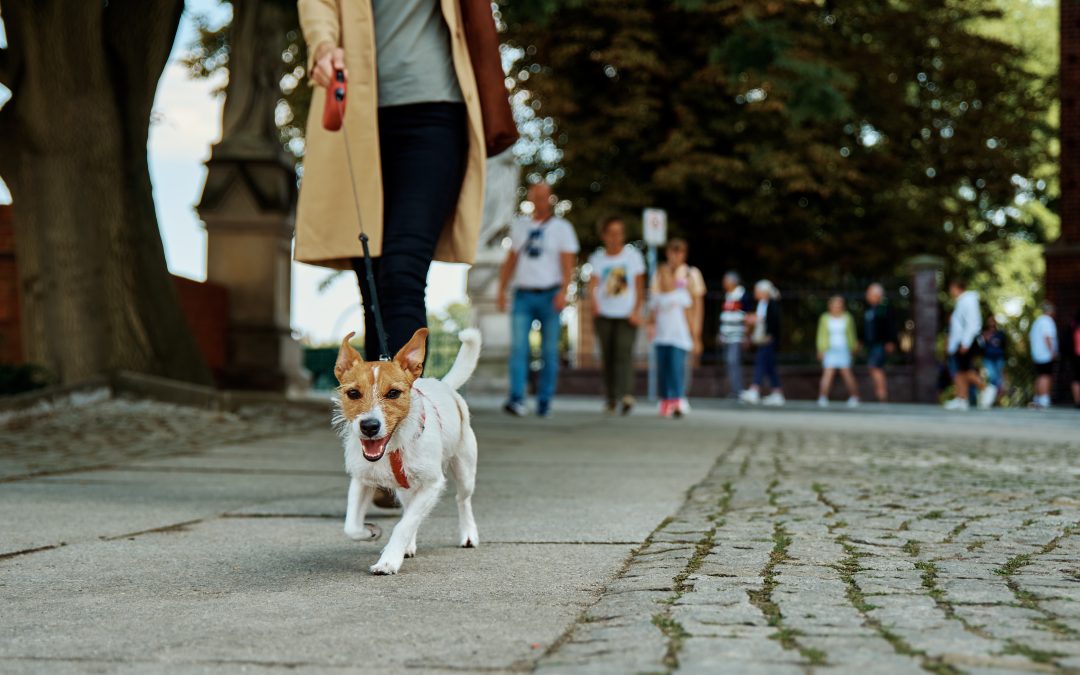
A weekend farmers market captures so much of what makes Los Angeles special. Fresh produce, enticing aromas, busy sidewalks, conversations, shopping bags, and people moving in every direction create an exciting atmosphere. For your dog, however, all that activity can turn an ordinary walk into one of the most challenging training environments in the city.
A dog who walks beautifully through a quiet neighborhood may suddenly pull, lunge, bark, or lose focus when surrounded by unfamiliar smells and constant movement. That does not mean your leash training has failed. It means your dog is being asked to use those skills in a much more distracting environment.
Mastering leash manners around busy Los Angeles hot spots requires preparation, patience, and gradual exposure. With the right approach, you can help your dog learn to stay connected with you even when the city offers countless reasons to look elsewhere.
Why Farmers’ Markets Are So Challenging for Dogs
Before working on leash manners in a busy setting, it helps to understand why your dog may suddenly seem to forget everything they know.
There Are Distractions Everywhere
Dogs experience a farmers’ market differently than we do. What feels like a relaxing Saturday morning to you can be an explosion of sensory information for your dog. Leash pulling is already an incredibly common behavior. In one recent study, 85.8% of dogs pulled during their first observed leash walk, and more than half pulled toward a smell. Add the food aromas, other dogs, people carrying bags, bicycles, street noise, and constant movement of a Los Angeles farmers market, and it is easy to understand why even a dog with good leash skills may suddenly struggle to stay focused.
Your dog may want to investigate everything at once. When excitement exceeds their ability to focus, pulling often follows.
Instead of viewing this behavior as disobedience, consider it information. Your dog is telling you that the environment is currently more challenging than their training skills can comfortably handle.
Crowds Reduce Personal Space
Busy Los Angeles sidewalks do not always provide much room to maneuver. People may approach quickly, stop unexpectedly, or attempt to interact with your dog without asking.
Dogs who are uncomfortable around strangers may feel trapped when they cannot create distance. Social dogs face a different challenge because they may want to greet everyone they pass.
Good leash manners are not simply about keeping your dog beside you. They also involve teaching your dog that they do not need to interact with every person, dog, smell, or distraction they encounter.
Build Leash Skills Before Heading Into the Crowd
A crowded market should not be the place where your dog first learns to walk on a loose leash. Start with environments where success is easier.
Practice on quiet residential streets, in your driveway, or in another familiar area with limited distractions. Reward your dog for staying near you and keeping slack in the leash. Once that becomes reliable, gradually increase the difficulty.
This progression is especially important for dogs who become easily excited or overwhelmed. Asking for perfect leash behavior in an intensely stimulating environment before your dog has mastered the basics often frustrates everyone.
Master Engagement Before Perfect Position
Loose-leash walking does not require your dog to stare at you throughout the entire outing. Your dog should be able to explore the environment while remaining aware of where you are and what you are asking.
Teach regular check-ins during quieter walks. When your dog voluntarily looks toward you, reward that attention. You can also practice changing directions, stopping, and starting again so your dog learns that paying attention to your movement matters.
These simple exercises create a valuable habit. Instead of disappearing mentally into everything happening around them, your dog learns to periodically reconnect with you.
That connection becomes particularly useful when you notice a distraction before your dog does.
Reward the Leash Manners You Want
It is easy to focus on pulling because it is frustrating and immediately noticeable. However, successful leash training also requires noticing what your dog is doing correctly.
Reward moments when the leash is loose. Reinforce your dog for choosing to stay near you, checking in, calmly passing a distraction, or slowing their pace to match yours.
Timing matters. If you wait until your dog has already reached the end of the leash, the opportunity to reinforce the behavior you wanted has passed.
Rewards do not always have to be food. Moving forward, stopping to sniff or gaining access to an interesting area can also reinforce good leash behavior. Your dog learns that staying connected with you is what makes enjoyable things happen.

Give Your Dog Space From Distractions
Distance is one of the most valuable tools in dog behavior training.
If your dog cannot walk calmly past another dog from 5 feet away, increase the distance. Cross the street, move toward the edge of the activity, or pause somewhere quieter.
Training does not become more effective simply because the situation becomes harder. Your dog needs to remain calm enough to learn.
As their confidence and skills improve, you can gradually decrease the distance between your dog and common distractions. This approach builds reliability without forcing your dog into situations they are not ready to manage.
Know When Your Dog Needs a Break
A successful outing does not have to last an hour. Ten focused minutes, followed by a relaxed walk somewhere quieter, may provide far more valuable training than staying in a crowded environment until your dog becomes overwhelmed.
Watch for changes in body language. Excessive panting unrelated to temperature, frantic scanning, repeated pulling, barking, difficulty accepting treats, or an inability to respond to familiar cues may indicate that the environment has become overwhelming.
Creating distance or leaving is not giving up. It prevents your dog from repeatedly practicing unwanted behavior and gives them an opportunity to recover.
Remember That Not Every Farmers Market Welcomes Pet Dogs
Before planning your training outing, check the current rules for the individual market. Some farmers’ markets restrict pet dogs from vendor areas, so it is important to check the rules for your destination before using a market as a training environment. Service animals are subject to different rules.
Fortunately, your dog does not need to walk directly between produce stands to benefit from this type of training. Nearby sidewalks and public areas can provide plenty of real-world distractions while allowing you to work at a comfortable distance.
The goal is not simply to take your dog everywhere. It is to teach them how to behave confidently and comfortably in the places where they are permitted and prepared to be.
Avoid Turning Every Busy Outing Into a Test
One of the biggest mistakes pet parents make is expecting every walk to demonstrate how much their dog has learned.
Think of busy outings as training opportunities instead. Some days, your dog may walk beautifully through a lively area. On another day, construction noise, a crowded sidewalk, or an unexpected encounter with a dog may make the same environment much harder to handle.
Adjusting your expectations to the situation helps keep training productive. Consistency matters, but so does recognizing what your dog can realistically handle on a particular day.
Take Your Los Angeles Leash Training Into the Real World
Great leash manners are built through repetition, communication, and practice in gradually more challenging environments. Once your dog understands the basics, real-world training helps bridge the gap between walking calmly at home and maintaining that composure around everything Los Angeles has to offer.
If your dog pulls through crowded sidewalks, becomes overly excited around other dogs, or struggles to focus in stimulating environments, personalized guidance can help pinpoint exactly where communication breaks down.
Pawsitive K9 Solutions provides private dog training designed around real Los Angeles lifestyles and environments. Rather than expecting skills learned in a quiet setting to automatically translate to the city, training can focus on the distractions your dog actually encounters.
The next time you head toward your favorite weekend hot spot, the goal should not be a perfectly choreographed walk. Aim for a dog who can stay connected with you, respond to guidance, and move through the environment with growing confidence.
Ready to replace pulling with calmer, more enjoyable walks? Contact Pawsitive K9 Solutions to schedule a consultation and start building leash manners that hold up when Los Angeles gets busy.


Recent Comments