
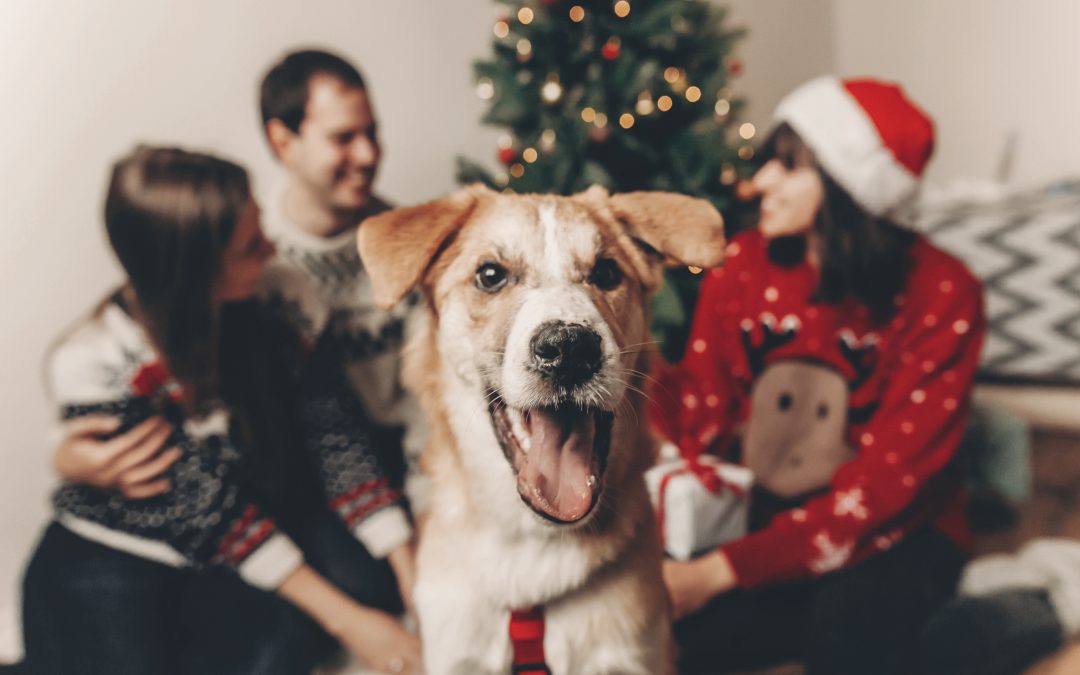
Holidays at Home: Prepare Your Dog for Holiday Guests and Noise in LA
Is my dog ready for the holidays? It’s a good question to ask before you send out invitations, bring out decorations, or welcome your first guests. While your dog might be fine with your usual routine, a busy house with new faces, noises, and changes can be much harder for them.
In Los Angeles, the holidays might mean a lively apartment party, a dinner at home, or weeks of friends and family visiting. For dogs, this often brings many new faces and lots of noise in a short time.
To get your dog ready for holiday guests, check how they’re doing now instead of waiting for barking, pacing, or awkward greetings to show there’s a problem. Knowing where your dog might struggle gives you a place to start training and helps you make a plan that works for them.
In short, to help your dog handle holiday guests and noise, look for signs of stress like stiffness, hiding, pacing, or trouble settling. Keep meals, walks, and potty breaks on schedule, give your dog a quiet place to relax, and practice greetings and settling before your first get-together.
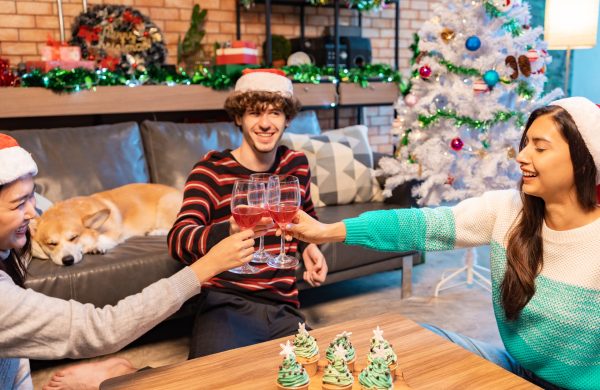
How Can You Tell If Your Dog Is Struggling with Holiday Guests?
A dog who greets visitors with excitement isn’t always stressed. What matters is whether their body language is relaxed and comfortable or tense and trying to avoid people.
A relaxed dog might come over with a soft look, wiggly body, and will move away when they’ve had enough. A dog who is having a hard time may get stiff, turn their head, hide behind furniture, or avoid people who come near.
Some signs are harder to spot. According to ASPCApro’s canine body language guide, lip licking and yawning can be early signs of stress, especially if your dog also has a tight mouth or looks away. Seeing the whites of their eyes, called whale eye, is another thing to watch for, especially when you look at your dog’s whole posture and the situation.
Notice what your dog does when a guest reaches out to them. Do they come closer or lean away? Do they relax soon after meeting someone, or do they stay tense for a while?
Watching these things helps you answer a better question than just ‘Is my dog good with people?’ Instead, ask how much interaction your dog is really comfortable with. For tips on polite greetings, check out our guide to training your dog for friendly interactions.
How Can You Tell If Your Dog Is Struggling with Noise?
Holiday noise isn’t just fireworks or loud music. Doorbells, laughter, clattering dishes, kids playing, and lots of conversations can make things tough for a noise-sensitive dog. Researchers at the University of California, Davis, found that even everyday household sounds can cause fear and stress in dogs, not just big noises like fireworks.
Some dogs bark right away when they’re startled. Others show quieter signs first, like pacing, following you from room to room, or moving around to different spots to rest.
Look for signs like sudden jumps, panting when your dog isn’t hot, trembling, or trying to leave the room. If your dog usually rests during dinner but can’t settle when guests are over, they might be telling you the noise is too much.
Pay attention to clinginess and restlessness, even if your dog hasn’t barked or acted out. You don’t have to wait for a big reaction to see that your dog might need a quieter space.
Think about which sounds your dog reacts to most. Is it the doorbell, a certain person’s voice, or just the noise of a busy room? Knowing the trigger helps you decide if you should practice with sounds, change how you host, or give your dog more space. If fireworks are a worry, check out our guide to fireworks anxiety in dogs.
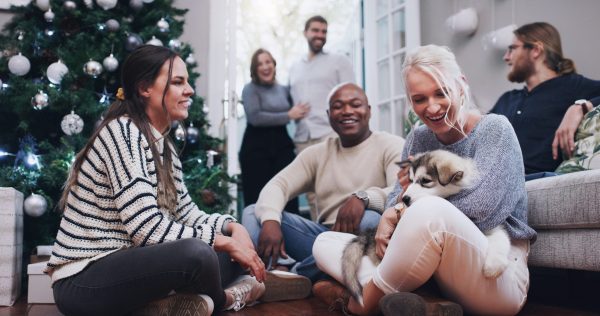
How Can You Tell If Your Dog Is Struggling with Routine Changes?
Dogs usually depend on a regular daily routine. But during the holidays, meals might be late, walks could be shorter, and bedtime may get pushed back while everyone celebrates.
Even a dog who does fine with guests might have trouble if their daily routine changes too much.
Watch for things like changes in appetite, accidents in the house, more barking for attention, or trouble settling at bedtime. These aren’t always training issues, but they’re important to notice, especially if your dog’s routine has changed.
The American Kennel Club suggests keeping mealtimes, potty breaks, and exercise as regular as you can during the holidays. A predictable routine helps dogs handle the extra excitement of visitors. The AKC also says that giving your dog exercise before guests arrive can help them relax and nap instead of getting into trouble.
Consider which parts of your dog’s routine matter most. If your dog needs a morning walk to relax, make sure that still happens. If they usually rest in a quiet room after dinner, try not to let guests interrupt that. For more tips, check out our advice on keeping up with dog training during the holidays.
If your dog suddenly loses their appetite or starts having accidents, it’s a good idea to check with your vet instead of just blaming holiday stress.
Is Your Dog Ready for the Holidays? A Quick Readiness Checklist
Still not sure if your dog is ready for the holidays? Try this quick self-check before your first get-together. You don’t need perfection—just look for situations that might need some practice or a new plan.
- My dog can remain comfortable on a leash while I answer the door.
- My dog can greet visitors calmly or move away without being followed.
- My dog has a familiar, quiet place to retreat when the house gets busy.
- My dog can recover from everyday sounds such as a doorbell or a dropped object.
- My dog can settle while people talk, eat, or move around the room.
- My dog’s meals, walks, and potty breaks can stay reasonably consistent when guests visit.
- I know my dog’s early stress signals and will respond before they become overwhelmed.
If you leave some boxes unchecked, that’s just something to plan for, not a judgment on your dog’s behavior.
If several answers are not yet available, start with the situations most likely to occur at your home. A dog who struggles with visitors may need greeting practice, while a noise-sensitive dog may benefit more from a predictable retreat.
For help establishing that retreat, read our guide to creating and using a safe space for your anxious dog.
How Do You Train for the Gaps You Find?
Once you know what your dog finds hard, you can pick training exercises that fit those needs.
Door Greetings and Food Boundaries
For practical steps involving door greetings, food boundaries, calm spaces, and daily routines, start with our Holiday Dog Training Hacks in Los Angeles.
Settling and Calm Spaces
If settling is the main challenge, our step-by-step guide to teaching your dog to settle offers a focused place to begin.
When to Get Professional Help
Some dogs need more help than a few weeks of home practice can give. Puppies who are still learning manners might do well in Puppy Day School, and private consultations can focus on your dog’s unique reactions to guests, noise, and changes in routine.
The goal isn’t for every dog to be happy at every party. It’s about helping your dog build skills and giving them the right choices and support.
Give Your Dog a Calmer Holiday Season
Taking a few minutes to honestly check in with your dog now can save a lot of stress later. Watch how your dog acts around visitors, pay attention to their body language, and figure out which parts of their routine help them feel safe.
Your dog doesn’t have to love every guest or sleep through every party. What matters is having a plan that respects their limits and helps them feel comfortable at home.
If your holiday check shows some things you’d like to work on, reach out to Pawsitive K9 Solutions or call (310) 596-1618 to set up a consultation. We can create a training plan that fits your dog’s needs so everyone can enjoy the holidays more.
Happy holidays from our family to yours!

Recent Comments